


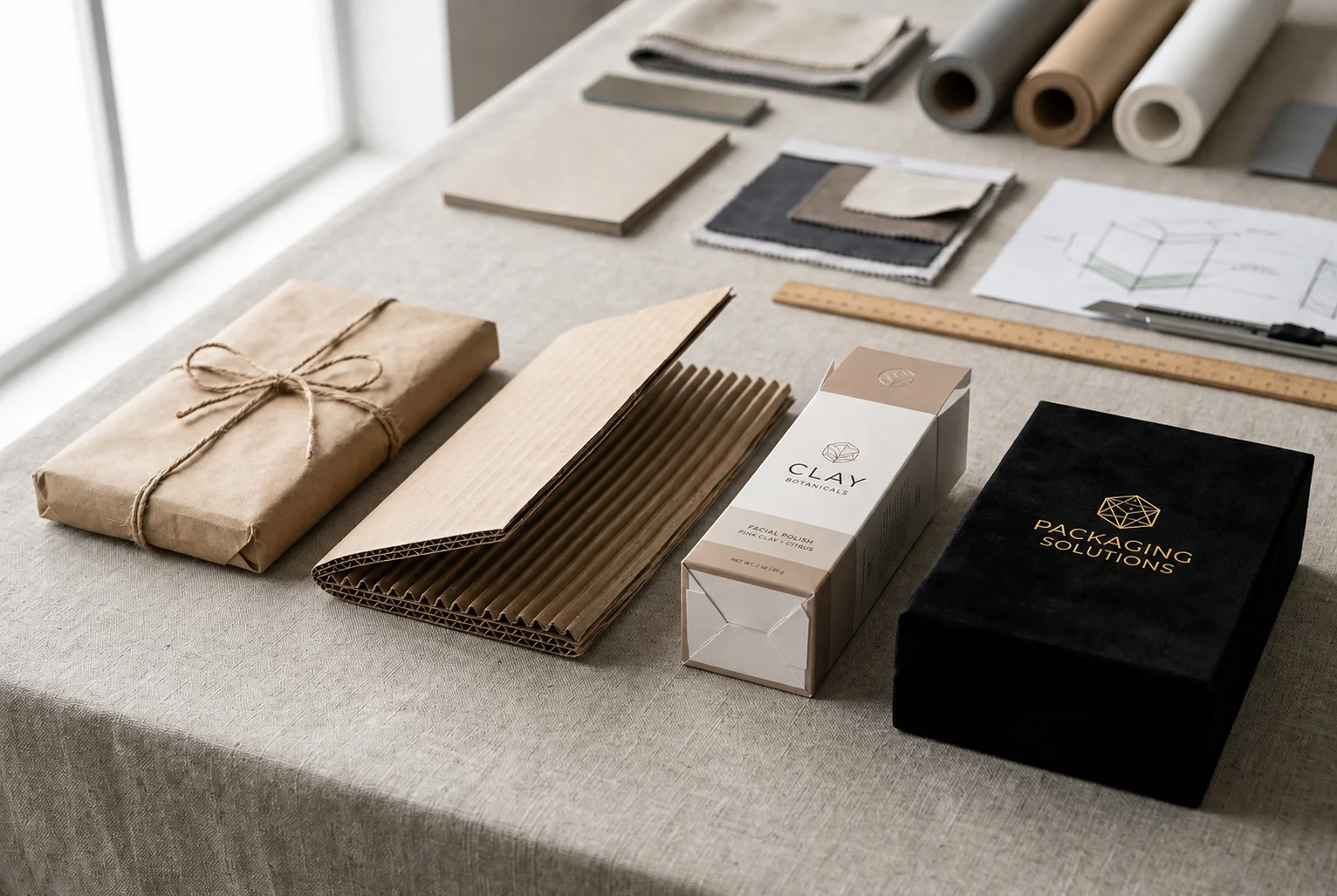
Packaging materials are the foundation of any packaging solution. They directly impact product safety, branding, cost, and customer experience. Choosing the right material is not just a technical decision—it’s a strategic one.
In this guide, we’ll break down what packaging materials are, why they matter, and how to choose the right one for your business.
What Are Packaging Materials?
Packaging materials refer to the physical substances used to create packaging that protects, contains, and presents a product.
These materials vary widely depending on the purpose of packaging, and they are generally categorized into:
- Paper-based materials (cardboard, kraft, paperboard)
- Structural materials (corrugated fiberboard)
- Premium materials (rigid board)
- Sustainable materials (recycled and biodegradable options)
Each material serves a specific function, from lightweight retail packaging to heavy-duty shipping protection.
Why Packaging Materials Matter
1. Product Protection
The primary role of packaging is protection. Fragile items require shock-absorbing materials like corrugated layers, while luxury products benefit from rigid structures that prevent deformation.
Choosing the wrong material can result in:
- Damaged products
- Increased returns
- Negative customer experience
2. Brand Perception
Customers often judge a product before even opening it. The material of your packaging communicates quality instantly.
- Thin, flimsy packaging → low perceived value
- Thick, premium material → high-end perception
Rigid boxes, for example, are widely used by luxury brands because they instantly signal quality and exclusivity.
3. Cost Efficiency
Different materials come with different costs. While premium materials offer better presentation, they also increase production costs.
The key is to balance:
- Material cost
- Shipping cost
- Customer experience
4. Sustainability Impact
Modern consumers are environmentally conscious. Materials that are recyclable or biodegradable help brands align with these values.
Sustainable packaging:
- Reduces environmental footprint
- Builds brand trust
- Improves long-term customer loyalty
Types of Packaging Materials (Detailed Breakdown)
1. Paperboard (Folding Cartons)
Paperboard is lightweight, flexible, and widely used in retail packaging such as:
- Cosmetics
- Food products
- Pharmaceuticals
Benefits:
- Cost-effective
- Easy to print and customize
- Eco-friendly
2. Corrugated Fiberboard
Corrugated material consists of fluted layers that provide strength and cushioning.
Common Uses:
- Shipping boxes
- E-commerce packaging
Benefits:
- High durability
- Excellent protection
- Ideal for logistics
3. Rigid Board (Luxury Packaging)
Rigid packaging is thick and non-collapsible, used for premium products.
Common Uses:
- Perfume boxes
- Electronics packaging
- Gift boxes
Benefits:
- Premium feel
- Strong structure
- Enhances unboxing experience
4. Kraft & Eco Materials
Kraft paper and recycled materials are widely used for sustainable packaging.
Benefits:
- Biodegradable
- Recyclable
- Natural aesthetic
How to Choose the Right Packaging Material
Choosing the right material requires a strategic approach:
Step 1: Understand Your Product
- Is it fragile or durable?
- Lightweight or heavy?
Step 2: Define Your Brand Positioning
- Premium brand → rigid packaging
- Budget-friendly → folding cartons
Step 3: Consider Logistics
- Shipping distance
- Handling conditions
- Storage requirements
Step 4: Evaluate Sustainability Goals
- Use recyclable materials
- Reduce excess packaging
Step 5: Balance Cost vs Experience
The best packaging is not the most expensive, it’s the most effective.
Common Mistakes to Avoid
- Choosing material based on cost only
- Ignoring product protection needs
- Over-packaging (waste + cost increase)
- Not aligning material with brand identity
Final Thoughts
Packaging materials are more than just a functional choice—they define how your product is perceived, protected, and remembered.
A well-chosen material:
- Protects your product
- Enhances your brand
- Improves customer satisfaction
Investing time in selecting the right packaging material will always pay off in the long run.